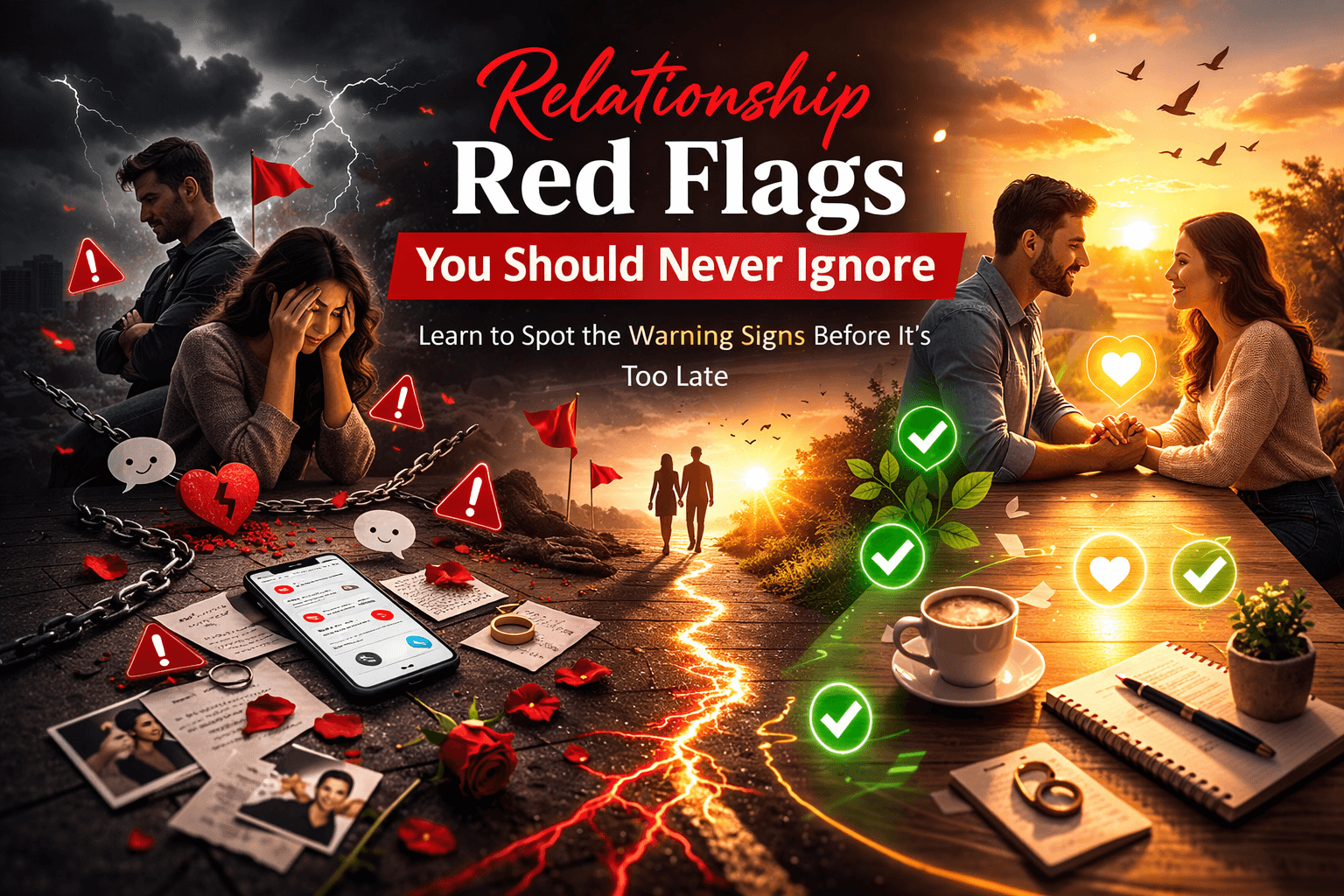
12 Relationship Red Flags You Should Never Ignore | Trusted Commitment
Learn to recognize toxic relationship patterns early, understand the "Rule of Three," and get a 4-week guide to setting clear, assertive boundaries.
NEW ASSESSMENT
Is your partner’s behavior a “deal-breaker” or just a “growth area”?
The concept of a “red flag” has become popularized, but its roots lie in clinical psychology. We often overlook flags due to emotional bias-the brain’s tendency to prioritize chemistry over consistency. When we ignore these
early indicators, we aren’t just giving someone a chance, we are often dismissing our own intuition.
Early Dating Red Flags
During the ‘honeymoon phase,’ our brains are flooded with dopamine, making it difficult
to spot these common early-stage behaviors

Love Bombing
Overwhelming affection, gifts, and
declarations ove extremely early in the
relationship designed to create dependency.

Disrespecting Staff
How a person treats waitstaff or service workers is often a preview of how they will treat you once the ‘charm’ wears off.

The Perpetual Victim
Every ex was ‘crazy’ and every boss was ‘unfair.’ An
inability to take accountability for past life events.
MIXED SIGNALS
Is It Interest Or Just Confusion
SIGNS SOMEONE IS NOT
INTO YOU

SIGNS SOMEONE IS
INTO YOU

Recommended Resources
BOOK RECOMMENDATION
“Attached” by Amir Levine
Master the science of adult attachment styles.
oNLINE COURSE
Boundary Setting 101
A 4-week guide to assertive communication.
expert quote
“The right person will respect your
boundaries without you having to defend
them”
Emotional Red Flags
01
Lack of Empathy
These flags relate to the inner psychological safety of the partnership and often emerge after the first 3
months.
02
Gaslighting
Subtly questioning your memory, perception for sanity. Phrases like “You’re
overreacting” or “That never happened.”
03
Conditional Love
Affection is used as a reward for compliment and withdrawn as a punishment for dissent
or autonomy.
Communication
Warning Signs
The quality of conflict determines the longevity of the relationship.

Passive-aggresive comments
Name-Calling during disagreements
Circular arguments without resolution
Refusal to discuss the “status”
The ‘Kitchen-Sinking’ Technique
When a person brings up multiple past mistakes
or unrelated issues during a conflict to overwhelm
you and shift focus away from the original problem.
The Silent Treatment(Stonewalling)
When someone deliberately withdraws communication
to avoid discussion, control the situation, or push you
emotionally instead of addressing the issue.
Behavioral Red Flags
Observable patterns that indicate deeper character concerns.
01
Isolation Tactics
Slowly encouraging you to distance
yourself from friends or family who
“don’t understand us.”
02
Privacy Invasion
Demanding passwords, checking
phones without permission, or
tracking locations as a “sign of
trust.”
03
Excessive Jealousy
Viewing every interaction you have
with others as a threat to the
relationship.
Extreme emotional outbursts over
minor inconveniences that make
you “Walk on eggshells.”
Unpredictable Rage
Unpredictable Rage
Extreme emotional outbursts over
minor inconveniences that make
you “Walk on eggshells.”

Behavioral flags are rarely isolated incidents. Look for the ‘Rule of Three.’ One time is a mistake; twice is a coincidence; three times is a pattern of character.
04
Deep dives into complex psychological
behaviors from leading experts.
Expert Tip
Watch & Learn
How to Respond to Red Flags
1
Acknowledge Without Excuses
Stop making excuses for them
(e.g. “They just a hard childhood”).
Acknowledge the behavior
exactly as it is without the filter of
your empathy.
2
Direct Communication
Name the behavior. “I noticed that
when I expressed my feelings, you
laughed. That felt dismissive to
me. Can we talk about that?”
3
Set a Hard Boundary
Decide what you will and will not
tolerate. “If you continue to raise
your voice during our dinner, I am
going to leave and go home.”
4
Consult a Trusted Third Party
Isolation is common in toxic
relationships.Share the specific
behavior with a therapist or a
friend who isn’t afraid to be
honest with you.
CONFLICT MANAGEMENT IN
RELATIONSHIPS

Safety Warning
If you feel unsafe or fear retaliation
for setting boundaries, please reach
out to the National Domestic Violence
Hotline. Addressing red flags with an
abusive partner can
escalate danger.
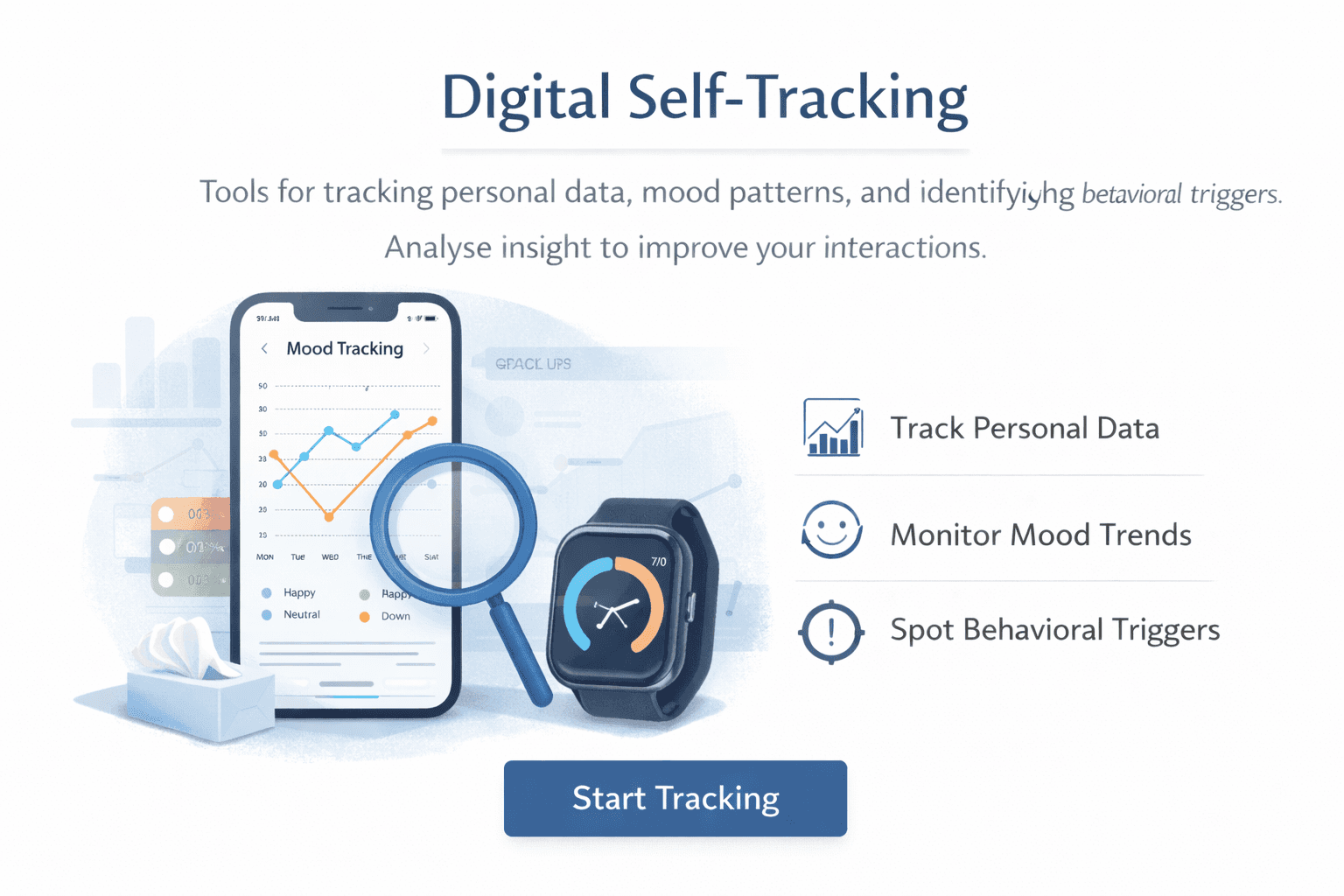
Tools That Help You
Make Better
Relationship
Decisions
Our editorial’ team’s top-rated resource
for self-discovery and relational health

EMOTIONAL INTELLIGENCE
Develop Stronger Relationships
Frequently Asked
Questions
Q:
What exactly ia a “red flag”?
A:
A red flag is a behavior, pattern, or warning sign that suggest potential harm, manipulation, incompatibility, or unhealthy relationship dynamics. It’s an
early indicator that something may not align with your values, safety, or long-term well-being.
Q:
Are red flags always
obvious?
A:
No. Some red flags are subtle and may appear as charm, intensity, or minor misunderstandings at first. Over time, patterns of manipulation, disrespect or emotional inconsistency often become clearer when you pay attention to repeated behaviors rather than isolated incidents.
Q:
If I see a red flag, should
I leave immediately?
A:
Not always. Some red flags may signal serious patterns that require immediate distance. While others may call for honest conversation and clear boundaries. The key is to assess consistency, severity, and whether the behavior changes over time.
Q:
Can people change their
red flag behaviors?
A:
Yes, people can change - but only if they genuinely acknowledge the behavior, take responsibility, and actively work to improve it. Real change requires consistent effort, self-awareness, and often
professional support, not just promises or temporary adjustments.
IN CLOSING
Your intuition is your most powerful tool.
If something feels wrong, it usually is.
“The goal of identifying red flags isn’t to become cynical or paranoid; it’s to protect
your peace so that when the right person comes along, you are healthy enough to
recognize them.”
Stop Guessing.
Start Seeing
Clearly
Join 50,000+ readers who receive our weekly insights into
relationship psychology and
healthy boundaries.
Follow Trusted Commitment




AFFILIATE DISCLOSURE:
This is a professional dating
resource website that reviews
and features products and
services. Some links on this
page are affiliate links, which
means we may earn a
commission if you make a
purchase through them.
This commission comes at no
extra cost to you. We only
recommend products and
services that we genuinely
believe will add value to your
dating life.

2026
TrustedCommitment.com. All Right Reserved.